









Compressing
time-to-market

For AI wearables without rebuilding your validation approach

Device OEMs building AI wearables face a validation challenge that their existing frameworks were not designed for. Neprion bridges that gap to begin meaningful validation on day one.

3D product visualization

Day one integrated validation

The intersecting engineering disciplines that define AI wearables each have their own optimization logic. However, no single team owns the interactions between disciplines. Each team operates with different priorities, optimizing for different things. The challenge in AI wearables is that when outputs from different teams interact in real products under real conditions, failures appear, and they appear late. This makes the methodology-building phase lengthy and costly.

Neprion eliminates that phase entirely, with established validation frameworks across all critical dimensions of AI wearable development. Silicon, product engineering, and validation operate as a connected system from the first week. Cross-domain issues surface early, when they are inexpensive to resolve. For OEMs working against competitive product timelines, the compressed setup time translates directly into a launch calendar advantage.

Day-one methodology

Establishing the basic validation methodology and integrated test suite for AI wearables typically takes a few quarters when built from scratch. Neprion’s methodology is pre-established, covering AI inference performance, power and thermal tradeoffs, multimodal interaction, and constellation device coordination. 

  • Reusable test artifacts and automation frameworks applied immediately 
  • Robotic automation and lab infrastructure already configured for AI wearable validation 
  • No trial-and-error on what to test; established protocols cover the failure modes that matter 
Cross-domain integration by design

AI model power demands that exceed silicon budget assumptions, UX gestures that degrade under real-world noise, certification constraints that force late hardware changes—these are cross-functional issues that separate teams discover too late. Neprion's integrated model keeps silicon, software, and validation in constant alignment.

  • AI-hardware-UX co-validation from the first sprint 
  • Silicon design inputs informed by validation requirements before tapeout 
  • Certification constraints introduced as design parameters, not end-of-cycle audits 
Constellation device validation

Multi-device ecosystems introduce validation complexity that single-device frameworks cannot address. Neprion has established these frameworks and applies them as a standard part of AI wearable engagements. 

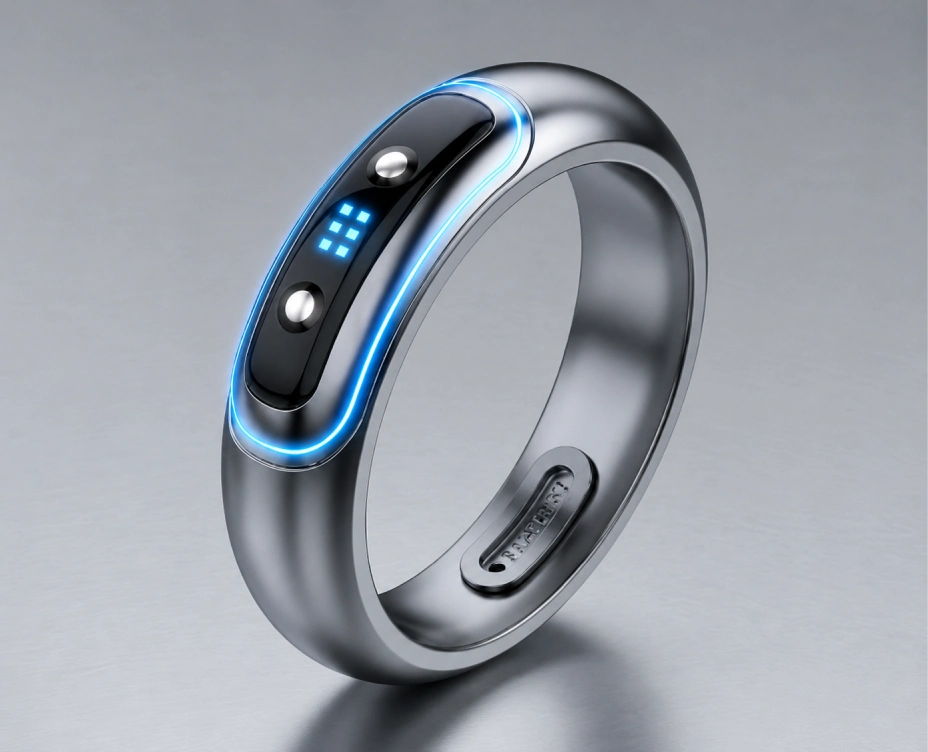
  • Device handoff testing across glasses, earbuds, rings, and companion devices 
  • Cross-device UX consistency validation 
  • Passive UI validation for ambient and always-on interaction models 
  • Latency and performance benchmarking under real network and environment conditions 
Certification without late redesigns

Certification constraints that arrive as a surprise late in a product cycle, power budget violations, RF interference, environmental durability failures, are among the most expensive forms of schedule risk in hardware development. Neprion introduces regulatory and certification requirements at the engineering design stage, reducing the probability and impact of late-cycle rework. 

  • Pre-certification testing against FDA, CE, and regional standards 
  • Platform compliance certification for ecosystem compatibility 
  • Regulatory requirements mapped to engineering decisions early in the program 

Our services

CASE STUDY

Smart Glasses Evolution

Learn how your team leveraged Neprion to validate their AI wearable platform and accelerate time-to-market.

Talk to our leaders

Connect with our experienced team who bring years of wearable innovation to every project.

Tinku Malayil Jose

Tinku Malayil Jose

Head of Technology Office, Hi-Tech

At Quest Global, Tinku transforms cutting-edge engineering into consumer-ready innovations for the future. With experience across consumer electronics, smart wearables, automotive, and IoT, he has partnered with leading global tech companies to launch category‑defining products. He bridges technical feasibility and commercial viability, and currently pioneers scalable, market‑ready AI and AR/XR solutions that redefine industries. His leadership guides global teams through complex productization journeys from concept to scale worldwide.


Arvind Singh

Arvind Singh

Global Practice Head for Device Engineering

Arvind Singh is a global engineering leader at Quest Global with over two decades of experience guiding safety-critical, compliance-driven products from definition to launch. Combining device engineering depth with expertise in EE & thermal performance, reliability, and lab focused validation, he partners on PRD clarity, turns requirements into verification strategies, and aligns cross-functional teams on outcomes. He’s known for system-level product judgment—balancing performance, risk, schedule, and cost to scale real-world solutions.

Thomas Winkler

Thomas Winkler

Product & Business Leader, Hi-Tech

Thomas excels at transforming disruptive technologies like XR and AI into high-quality, market-ready products. Drawing on experience from Nokia to startups, he leads offering strategy and builds high-achieving engineering teams at Quest Global. Thomas specializes in human-centered design, ensuring technical solutions meet original intent while delivering the strategic value and usability today’s global markets demand.